



Cannon Hatcher | Behind the Badge
By: Greg Rush
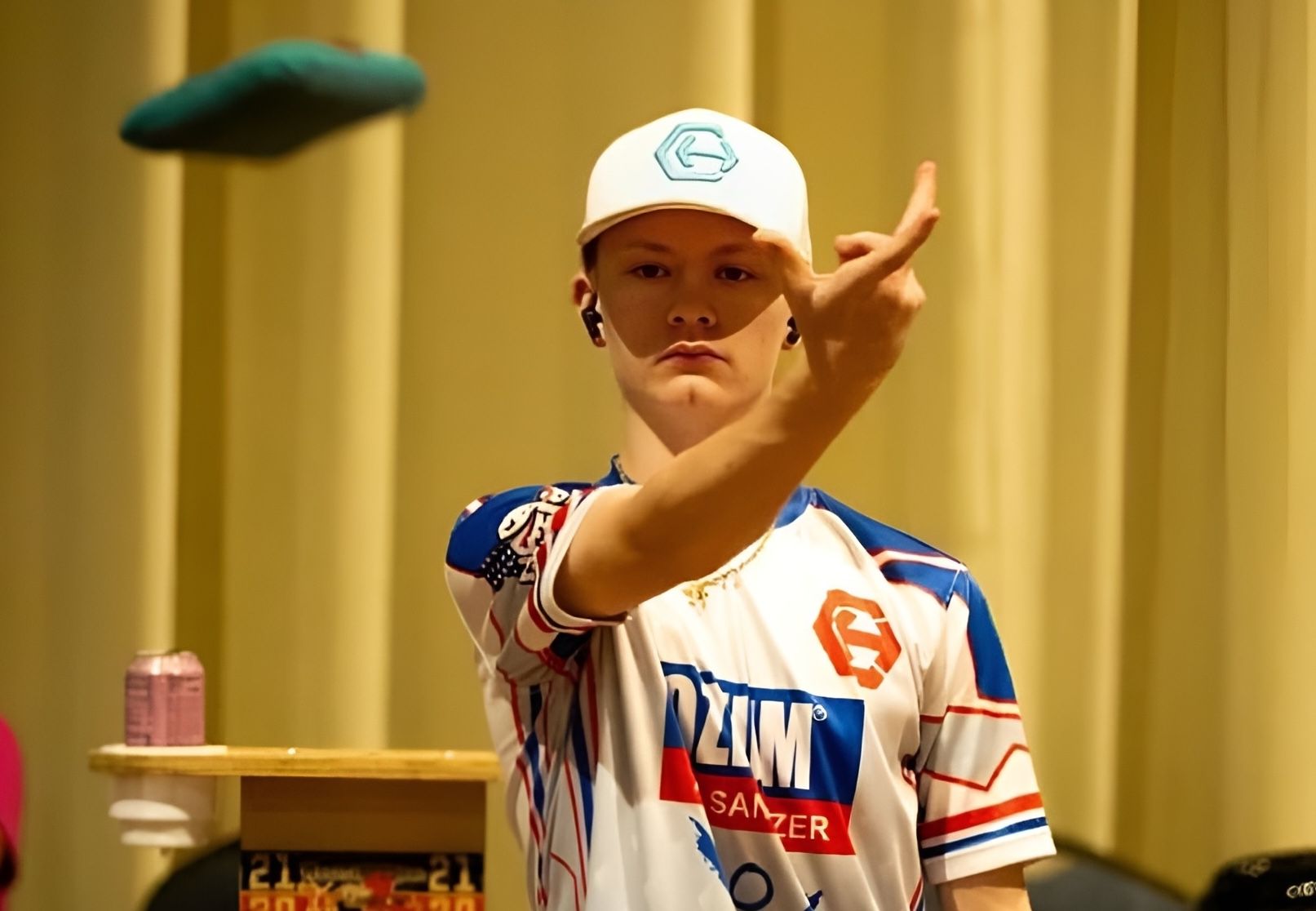
Cannon Hatcher (Eta Omicron/Northwestern State 2029) is a Louisiana-based competitor who’s been working to prove cornhole isn’t just a tailgate pastime, but a rapidly growing sport with serious stakes, serious training, and competition at a national level. From turning down a pro contract to chase collegiate competition, Cannon shares how Theta Chi has made him a better competitor.
Q: Do your fans call you anything during tournaments? And what’s the story behind the name Cannon?
A: I don’t have a nickname just yet. The name Cannon came from my great-grandfather, who had the same name.
Q: What's your hometown, and why did you choose Northwestern State?
A: I am originally from Memphis, TN, and moved to Goldonna, LA, just over two years ago. I chose Northwestern State because it was close, allowing me to commute to school from home.
Q: How has Theta Chi helped you grow as both a competitor and a person?
A: Theta Chi has brought me support and optimism to look forward to through every high and low moment. Even with members of the Fraternity knowing close to nothing about the sport, they still do everything they can to push me to be the best person I can be both on and off the boards.
Q: What's an ideal of Theta Chi that you hold closest to your heart, and why?
A: The ideal of Theta Chi that resonates the most with me is providing an Assisting Hand to others. I am an advocate of mental health awareness, and I’ve made sure to help and support others anytime I’m able.
Q: When did you start playing, and when did you first enter a tournament?
A: I started playing when I was 13, so it’s been a little over five years now. The first tournament I can remember was at an old high school gym, and I played in four different events and won about five games total. My first big tournament was not much better. It took a lot of time for me to compete at the level I can now.
Q: Cornhole is usually played recreationally. How did you go from casual play to serious competition?
A: I wasn’t naturally good at cornhole. I’ve been competing in events for nearly five years. After my first time playing in a tournament, I found my love for the game and quit a bowling league I was in to pursue the American Cornhole Organization (ACO), American Cornhole League (ACL), and Texas Cornhole League (TCL). These are the major organizations that run events like ACO’s Majors, ACL’s Nationals (including college championships), and TCL’s Signature Series. It took years of playing to get my first-ever professional contract, which I turned down to pursue playing collegiate cornhole.
Q: What did you love about the game? And why quit bowling?
A: The community was and still is the best thing about cornhole. While everyone is competitive and wants to win, the majority of them are just regular people having fun. The humble and supportive nature of the community is the biggest factor that inspired me to quit bowling.
Q: You turned down a pro contract to pursue collegiate cornhole. What drew you to the college circuit? How big is it right now, and is going pro a full-time living yet?
A: I played in the high school national tournament my freshman year, and that is when we first learned about collegiate cornhole. Ever since then, playing for college was what I had planned. Collegiate-level cornhole is not incredibly huge, but it has grown over the years. The college nationals (where I finished 2nd overall) had 118 total players. About two years ago, a student team got the first-ever $20,000 scholarship to play cornhole for a college team. Pro cornhole is still a sport that needs growth to be comparable to the NBA or NFL. The top players make their money and can pursue cornhole as their main source of income, while most professionals still have to work a job to fund their lifestyle. The most common job I hear cornhole pros have is teaching.
Q: What do you think made competitive cornhole so popular? YouTube? College culture? Tailgating?
A: Competitive cornhole really grew during the pandemic, when ESPN had nothing to run on TV. The ACL took advantage of this and started broadcasting cornhole to the world. This was the first time many people saw professional cornhole. Since then, it’s grown to the point that the sport has become international.
Q: What does your training/practice look like?
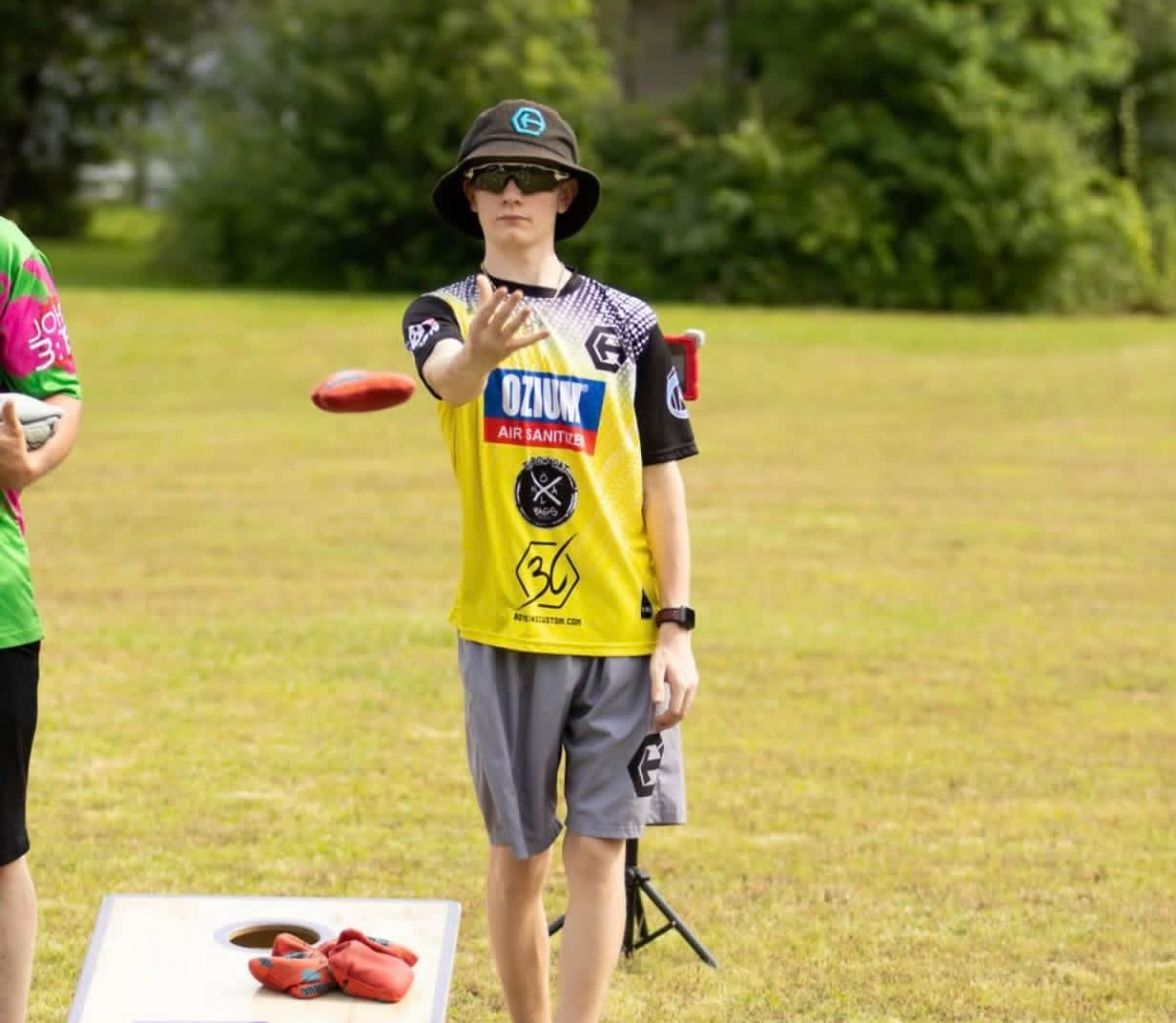
A: I used to throw nearly every day. Thinking about practice and all the rounds I’ve played, it’s easy to say I’ve probably thrown over 100,000 bags, maybe even closer to 200,000. There’s not really a routine to practice; it’s a game like darts or bowling. Players constantly have to work on their consistency to perform at a high level. Our field of players has gotten so tough and talented that you could be playing for as long as an hour just to score 21 points. It’s a big endurance game that values consistency, and, over the years, I’ve built my muscle memory to provide just that.
Q: Do you compete solo or with a team? And at NSU, is there a cornhole club, or is it just you right now?
A: That depends. In tournaments, you play multiple events: singles (just you), doubles (with a partner), and blind draw (you with a randomly selected partner). There are some different formats as well, but these are usually the most common. My sponsors (to use NOLA Bags as the example) could be seen as me being “Team NOLA,” but that is not something people in the sport particularly say. It is more of “I throw NOLA Bags,” but it is never defined as a team. As far as a club team, I am actively working on creating a club at NSU, which will hopefully be starting later this spring.
Q: What's the biggest misconception you think people have about cornhole?
A: People believe that cornhole is not “big” or it’s not a “real sport,” when in reality, there are people who make their living from cornhole. People who play enjoy it and value competition, ranging from backyard players all the way to the professional level. It’s actually a big sport when you get to see it from the inside, currently having 400,000+ accounts on Scoreholio (an app used primarily by ACO, TCL, and recreational players) and 17,000 on the ACL (the most competitive organization for cornhole).
Q: Where can someone interested watch cornhole be played?
A: Cornhole can be found anywhere on YouTube, Instagram, Facebook, TikTok, etc. Facebook is the most prominent place to find organizations and find their websites from there. For brothers who want to get into playing competitively, the best thing to do is download Scoreholio off the App Store and make an account. It can show you when and where to play and help to get yourself involved with communities of players within your region. If you’re focused on only spectating the sport, I normally go live on Facebook for big events and post on my Instagram and TikTok, featuring clips, trick shots, and tips.
Q: What's an athletic accomplishment you want to achieve this year?
A: I want to become the third consecutive state champion in Louisiana–I’ve won our state championship the previous two years back-to-back, and want to go for a third. I hope to compete in Myrtle Beach for the ACL College Nationals on New Year’s and become a College National Champion (This previous year, I placed second).
Cannon’s story is a reminder that excellence shows up in places people underestimate, and that consistency, resilience, and community matter in any chosen arena. Whether he’s throwing bags for a third straight state title or extending the Assisting Hand, his Theta Chi brothers will be there with him.