



[Assistant Editor's Note: The following article features Sgt. Alan Boyer (Beta Epsilon/Montana 1965). It originally appeared in the Winter 2016 issue of The Rattle]
Still Hanging On
By: Kris Taibl, Editor
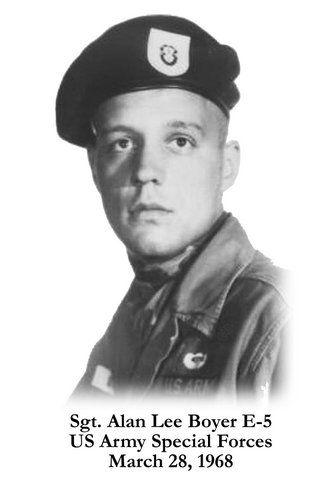
Heavy enemy fire poured down as the Bell UH-1 Iroquois helicopter, commonly known as “huey,” attempted to extract a group of soldiers from the thick South Asian forest. It was March 28, 1968, in Laos, at the height of the Vietnam War, and a covert mission was underway. Sgt. Alan Boyer (Beta Epsilon/Montana 1965) was alongside fellow Green Berets Sgt. George Brown and Charles Huston, as well as seven South Vietnamese soldiers. The chopper was unable to land due to the hostile fire, so a hanging ladder was dropped. Six of the South Vietnamese soldiers made it safely onto the huey, as the remaining men provided cover fire. While the seventh soldier climbed, ground fire became so intense, the chopper was forced to retreat. Brother Boyer had started climbing the ladder as the helicopter made its exit. With only a few more feet to go, the ladder snapped after getting caught in the brush, and Boyer fell into the foliage with the two other Green Berets still on the ground. Reports account that the men were last seen safely holding their position in the dense forest. Although a search and rescue mission was conducted in the following days, no signs of the men were ever discovered. At the time, the general public was unaware of the classified mission. This is all Judi Boyer Bouchard knew of Alan’s disappearance for more than 40 years.
The University of Montana
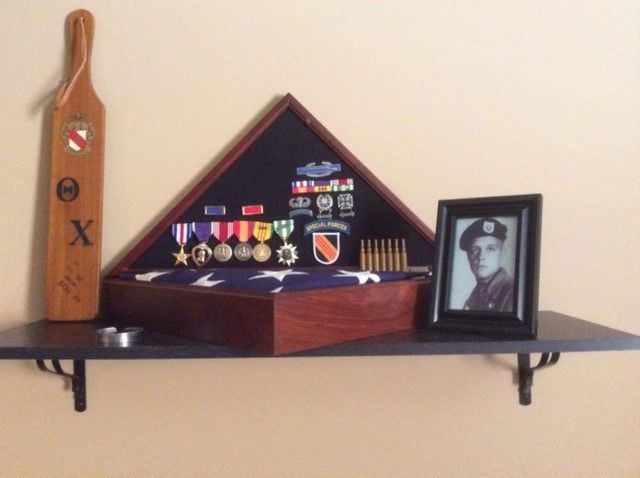
As his younger sister, Judi, followed Alan to the University of Montana in the sixties to study Anthropology, “I tried to do everything he did. He was the quintessential big brother,” explained Bouchard. “He taught me how to ride a bike, drive a car—everything. I just adored him. For most of my life at that point, I was just Alan Boyer’s little sister, which was wonderful.” Brother Boyer initially enrolled in classes to study forestry, having an affinity for the outdoors. “Our family was big into camping,” said Judi. “By the time we both began our studies in Missoula, we had camped in the contiguous 48 states.” Despite being born in Chicago, the family’s focus on the outdoors stuck with Alan, working at Yellowstone National Park for several summers while growing up. After beginning his forestry studies to further his love of the outdoors, Alan decided to join Theta Chi at the University of Montana.
“I was impressed with Al from the start,” recalls chapter brother and Montana native, Charles Hubbard (1966). “He seemed like a good man—serious, mature, caring, friendly, outgoing, and a good student and friend. We were not awfully close, but we related well, as I sometimes mentored Alan as an upperclassman.” Alan was two years younger than Brother Hubbard, so, although they were in different stages of their collegiate careers, the two still became familiar Theta Chis. “Our relationship was solid as fraternity brothers,” and, according to Hubbard, the majority of Alan’s friends were made up of Theta Chis.
At the onset of the American involvement in Vietnam, Alan had begun to reconsider his forestry career. He called his parents, Charles and Dorothy Boyer, who were still living in Illinois, and explained to them his uncertainty about college. “I don’t know what I really want to do,” Judi recalls Alan saying. “I know you’re going to be disappointed, and I’ll finish college at some point, but for now, I’m going to enlist—sorry Dad—in the Army.” Charles Boyer, Alan’s father, had served for more than three years in the Navy in various locations across North America, but he accepted his son’s decision. They were extremely supportive parents, according to Judi, and backed anything Alan or she did. They were understanding of Alan’s desire, but would hold him to finishing his degree when he came back. Unfortunately, he never was able to keep that promise.
Prior to shipping off to Vietnam, Alan traveled to Missoula to visit his sister and Theta Chi brothers. “That was the last time I saw him, in the fall of 1967,” recalled Judi. “In my mind and heart, he is frozen in time as the handsome 21-year-old Green Beret.”
Vietnam and Laos
While he was overseas, Judi and Alan remained in touch. “I wrote him almost every day,” she explained. “Amazingly, he wrote back to me as much as possible.” Alan could never actually disclose where he was or what he was doing, because many of his missions were classified. Nevertheless, he did his best to keep Judi in the loop, describing his disbelief in how far he had traveled. “I never thought I’d see this part of the world,” one letter explained. Alan also wrote of the fear that would accompany many of his highly tactical missions. “When I found out how dangerous the missions were, and the way they were constantly on the move, I still don’t understand how he found the time to write me,” said Judi. In his last letter to his sister, Alan wrote, rather prophetically: “I’d just love to have someone call me Sarge before I die.” He was promoted to Sergeant while still declared missing in action. To this day, the objectives of his final mission are classified.
The question remains, however, what was the United States military doing in Laos? For nine years, covert bombing campaigns were conducted across Laos in an attempt to prevent communist forces from entering Vietnam, which borders the country. Many of these secret campaigns were conducted in conjunction with the Central Intelligence Agency and their overarching objectives and details remain a secret. In total, over 2 million tons of bombs were dropped on the country. Millions remained unexploded for decades, causing hundreds of accidental deaths.
Despite the body counts from Vietnam being broadcast each night on the evening news, Judi never let it drown her positive thoughts about Alan’s eventual return. As a Green Beret, he was one of the most elite and well-trained soldiers in the Vietnam War. To Judi, this was comforting.
A phone call came to Judi one night while in Missoula. It was her parents. Alan was missing. One might assume devastation to follow such a phone call, but Judi remained confident. “I kept thinking, he’s bright, he’s strong, he’s in special ops, he’s trained for these situations. This is horrible but…he’s going to come back.” Near the same time of Alan’s disappearance, the United States was receiving reports of POWs being used in propaganda films/photos. A number of these were shown to the Boyers, but none held any sign of Alan. “Every night I prayed, Ok Lord, we didn’t find him today. How about tomorrow?”
Years passed, and the Boyer family still yearned for answers. In late 1972, rumors about peace talks had begun to surface. “Finally, we thought Alan would be coming home,” explained Judi. The Paris Peace Accords, after years of deliberation, were signed by all parties in January 1973. This was, in short, a treaty intended to end the war and restore peace in Vietnam. When the news reached the Boyers, they felt a sense of relief. The return of 591 American prisoners of war, known as Operation Homecoming, followed the Paris Peace Accords and they thought Alan would certainly be on that list. The soldiers returned home, and Alan was not one of them.
The Fall of Saigon came on April 30, 1975, marking the end of all fighting amongst the Northern and Southern Vietnamese forces. It was also around this time that the Boyer family began to hear less and less on the status of those missing in action. Some communication resumed when General John William Vessey was appointed as the chairman of the Joint Chiefs of Staff and became heavily involved in accounting for those missing in action. This would become known as the prisoner-of-war and missing-in-action issue (POW/MIA issue). Remains would periodically come in, but in relation to the number of men still missing, it was a drop in the bucket. At the time, 1,350 Americans were still listed as POW/MIA, and another 1,200 reported as killed in action (KIA), with no bodies recovered. It was at this time that General Vessey compiled a list of the 81 men who were still unaccounted for, last seen in Laos. Answers were sought out from the Vietnamese as to what happened to these men, to no avail. At this point, Alan was still declared MIA. Throughout the remainder of the 1980s, the United States increased its communication in relation to the POW/MIA issue. They were able to excavate numerous crash sites throughout Vietnam and Laos, but the crash site where Alan was last seen brought no answers.
In the early 1990s, the United States opted to normalize relations with Vietnam, and for many POW/MIA families, this was difficult. “Thousands of family members were still searching for answers,” said Judi. “To give up this bargaining chip was truly a large blow to my family and me, and to so many others.” The years passed, and although the Boyers remained vigilant in their search for answers, the outlook continued to appear bleak. In 1994, Charles Boyer passed away on the operating table during a routine bypass surgery. “My father was not one to show grief,” explained Judi. “I think the weight of Alan’s disappearance played a big role in the deterioration of his health.”
Visiting Laos
In 2001, Judi and her mother, Dorothy, decided to travel to Laos. A tour group was heading to Southeast Asia and would be passing through the country. “The site where Alan was last seen was no longer accessible, and we knew that, but we felt compelled to go, regardless,” explained Judi. Upon their arrival, they called the United States Embassy in Vientiane, the Laotian capital. Judi and her 81-year-old mother didn’t know what to expect as unannounced visitors, but an officer came to pick them up, and the three of them went to lunch before heading to the Embassy. Incredibly, the officer realized that the office had just installed a large picture of the exact spot that Alan was last seen. Although the trip did not necessarily bring any answers, Judi and her mother left with a certain degree of comfort. Several years later, some hope came. A tooth with a DNA match for George Brown, one of the Green Berets last seen with Alan, was discovered. Nothing about Alan surfaced, and it did not bring any sense of closure, but it was a hopeful sign. It allowed them to keep holding on.
In 2013, while Judi and her mother, Dorothy, were attending a conference in Phoenix, Dorothy Boyer fractured her hip. Initially, it seemed like a rather minor incident, and they would be in and out of the hospital in a few days. Several months later, Judi’s mother had yet to leave the hospital. Shortly before they were about to discharge her, a phone call came to Judi from the doctor treating Dorothy: “You need to get to the hospital. Your mother is dying.”
In her final moments, Dorothy turned to Judi. “I just want to go home,” she said.
“Then go. Go home,” replied Judi.
The last word she spoke was “Alan.”
“She knew. Alan was there to greet her, and she knew,” said Judi.
March 7, 2016
On the night of March 7, a day after what would have been Alan’s 70th birthday, a phone call came and Judi answered. A deep voice responded, “May I speak to Judith, please?”
“This is she,” she replied.
“This is the U.S. Army…”
It was at this moment that Judi knew.
“You guys found Alan.”
“We did.”
For decades, graves were looted by remains traders, the goal being to sell back to their countries of origin. In this case, a Laotian peace activist had come into possession of Alan’s remains and returned them to the U.S. Government. Not only were the remains a DNA match for Alan, but it was the most powerful match the military staff administering the test had ever seen. Several days after the phone call, special forces soldiers, as well as Michael Linnington, the Director of the Department for POWs/MIAs Accounting Agency (DPAA), came to Judi’s Central Florida home. “For 48 years, I didn’t know anything,” said Judi. “Now I’m able to grieve. I never was able to do it.”
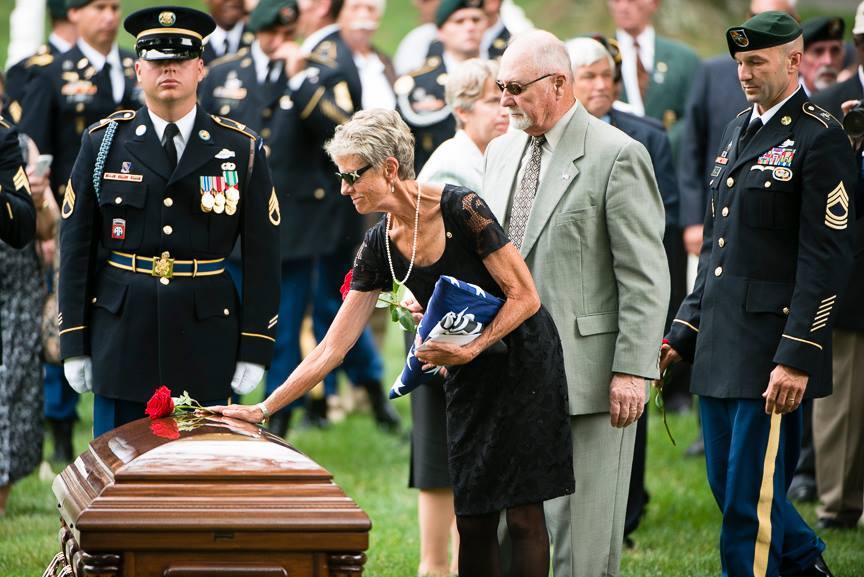
While Charles and Dorothy were both alive, they made it clear that they wanted Alan to be buried at Arlington National Cemetery, and Judi was sure to make that happen. On June 22, 2016, Alan was finally laid to rest with full military honors. The turnout for the funeral was remarkable, according to Judi, with high school classmates and friends from over 50 years ago in attendance, as well as Special Forces soldiers from all over the country. Most significant was the turnout of Theta Chi brothers from Beta Epsilon/Montana. “You saw that it was a true brotherhood that they had,” noted Judi. “He always mentioned Theta Chi in his letters to me, and the men who attended the service truly speak to how important of a role it played in his life.”
The night before the service, the brothers who traveled met up for drinks and food. Bill Thomas (Beta Epsilon/Montana 1969) and his wife traveled from Europe just to attend the service. “Al and I were brothers in the truest sense,” explained Thomas. Both men had found their way to Montana from Illinois, and realized that their interests and spirited personalities were identical, quickly becoming friends and moving in together. “At dinner, I stood up and said how proud I was to be a Theta Chi then, and how proud I still am to this day,” said Thomas. Six Beta Epsilon brothers from Alan’s era were able to attend the ceremony, three of whom came from his same pledge class. “Those guys who were at the Arlington ceremony were my support,” said Thomas. “They knew that, of all of us, Alan and I were probably the closest. So I needed to rely on them. They were there for me, they were there for Judi, and they were there for Al.” Thomas went on to describe the lasting impact the Fraternity has had on his life. “Being in the Fraternity at Montana was a wonderful experience for all of us. None of us had any doubt about being in Theta Chi. It was a great experience.”
Judi Bouchard is a persistent advocate on the POW/MIA issue, speaking to groups across the country. “Our country’s soldiers need to know that they won’t be forgotten, they won’t be left behind, and they will always be accounted for,” explained Judi. Prior to her passing, Dorothy Boyer was heavily involved in Vietnow, a group dedicated to assisting families with issues stemming from the Vietnam War. The Boyers also had started a scholarship fund in Alan’s memory, which continues to this day. The annual fund helps students attending the University of Montana and is based on financial need and academic performance. To remember Brother Boyer, a resolution was read to the 500 attendees this past summer at the 160th Anniversary Convention in Atlanta.